
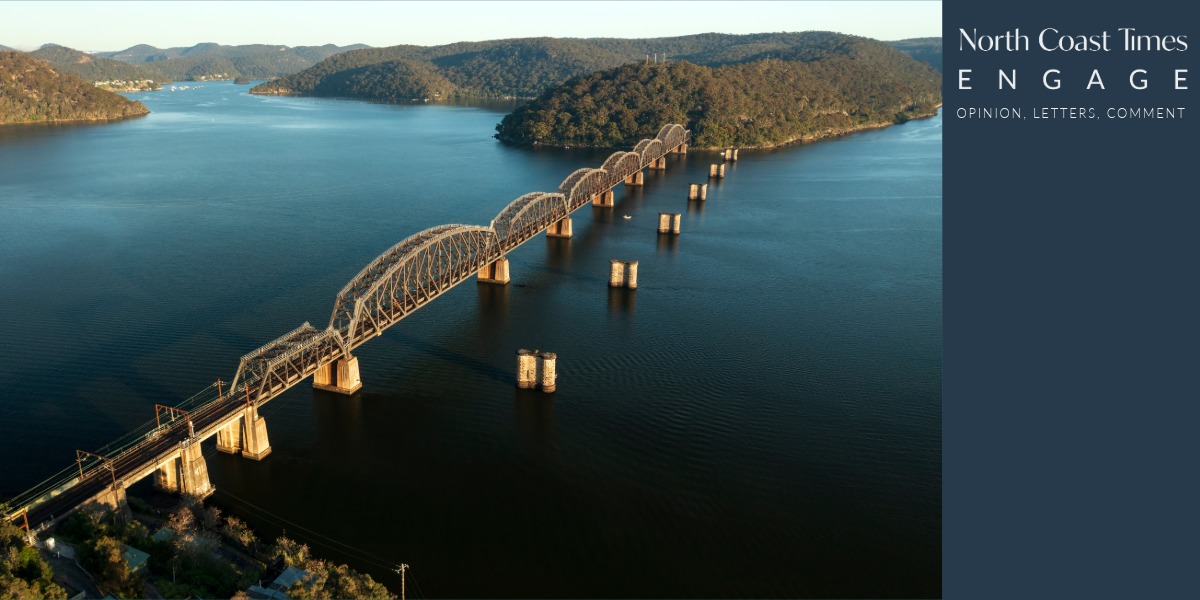
Recent mainstream media reports have highlighted the staggering estimated cost of a proposed fast rail link between Sydney and Newcastle — reportedly approaching $90 billion. This is more than double the earlier estimate of 40 billion. The scale of the proposal is immense, involving more than 130 kilometres of tunnelling, including complex engineering works through the Hawkesbury River basin.
This raises a fundamental question: is this the most strategic use of taxpayer funds?
The Sydney–Newcastle Fast Rail Question
The corridor between Sydney and Newcastle, including the Central Coast, is already one of the most densely populated and rapidly growing regions in New South Wales. Housing prices have escalated significantly over the past decade, and infrastructure — from roads to schools to health services — is under sustained pressure.
Constructing a high-speed rail line in this corridor is likely to intensify those pressures. Improved commuting times would make the Central Coast even more attractive to Sydney-based workers seeking lifestyle advantages, driving further population growth and pushing housing affordability even further out of reach for local residents.
Rather than easing congestion and cost-of-living pressures, such a project risks compounding them.
It is also worth noting that an electrified heavy rail line already exists between Sydney and Newcastle, operated by NSW TrainLink and Sydney Trains. Services already operate at high frequency, and incremental upgrades — including signalling improvements and track enhancements — could significantly increase capacity at a fraction of the cost of a new tunnelled high-speed alignment.
If services ran every 15 minutes instead of every 30 minutes, would that not achieve meaningful improvements without a $90 billion price tag?
An Alternative Vision: Regional Fast Rail
For a similar level of investment, Australia could deliver something transformative: a fast rail corridor between Sydney and Brisbane via regional New South Wales and regional Queensland.
Such a corridor would unlock the economic potential of inland towns seeking population growth, business investment, and skilled professionals. It would offer:
Affordable housing options
Open space and lifestyle advantages
Lower land costs
Opportunities for decentralised industry
Rather than concentrating growth along an already pressured coastal strip, a regional fast rail strategy would distribute growth more evenly and strategically.
It would align with long-standing national conversations about regional development, resilience, and population decentralisation.
The Escalating Cost of Mega-Projects
Governments are rarely drawn to modest infrastructure solutions. Large, complex, high-profile projects often attract extensive consultancy, engineering, and international construction involvement. While expertise is essential, history shows that mega-project cost estimates frequently escalate dramatically over time.
The most prominent example is Inland Rail. Originally estimated at approximately $8 billion, the projected cost has now risen to around $32 billion. Scope changes, engineering challenges, land acquisition issues, and governance complications have all contributed to the escalation.
Cost blowouts on this scale place enormous strain on public finances and raise legitimate concerns about project planning, route selection, and long-term value for money.
A Missed Opportunity in Route Selection?
One of the most contentious elements of Inland Rail has been route selection.
Why was greater consideration not given to alignment via the New England region, where an existing — though currently underutilised — rail corridor already exists?
The Great Northern Railway corridor through New England presents a potential opportunity to:
Reduce new land acquisition
Minimise tunnelling and major earthworks
Lower overall project costs
Deliver regional economic uplift
Redirecting or integrating Inland Rail through such existing corridors could save billions of dollars while stimulating regional growth across communities that actively seek investment and population expansion.
Strategic Planning vs. Political Momentum
Between Sydney and Newcastle, there is already substantial rail infrastructure. Along the inland regional corridors, by contrast, there are communities eager for connectivity, investment, and long-term economic stimulus.
The policy question is not whether Australia should invest in rail. It absolutely should — particularly as part of national decarbonisation and freight modal-shift strategies.
The question is whether we are investing in the right corridors.
Are we reinforcing congestion and high land costs in already pressured coastal regions? Or are we unlocking the productive capacity of inland Australia?
With billions of taxpayer dollars at stake, strategic infrastructure planning must prioritise long-term national benefit over short-term political visibility.
Fast rail and Inland Rail should be nation-building projects. The opportunity remains to ensure they truly are.
Got something on your mind? Go on then, engage. Submit your opinion piece, letter to the editor, or Quick Word now.
My concern with inland rail is the last I heard they were putting it across flood plane country – no matter how much they build it up, they probably won’t put enough culverts and pipes in to allow flood water to flow through on a flood plane. Risking the closure of the line for this reason.
Yes the regions need to be developed, but I am hearing that the Sydney to Newcastle line really needs Quad tracking now or soon to separate express trains like country link from local trains. But why just Quad track it – rather than make it high speed rail instead.
Some people have questions about the length of life left in the current (I.e. 2nd) hawksbury River rail bridge.
I believe the steel gurder bridge across the flats of the peel River in Tamworth would need to be replaced and upgraded to run inland rail up through Armidale. Likely duplicating this bridge, or finding an alternative bypass around that river flat area. I am not saying this is the only bridge that would need to be replaced, given IR trains are 2 kms long and double stacked containers – the sheer weight there would be massive.
Long term and if the govt was willing to spend the money I see the New England rail line as a good bypass line for inland rail and for the north coast line. Getting govt to spend the money on this sadly proves difficult.
How would I fund all this, by taxing coal and gas appropriately, I support the 25% on gas, should be 40 to 50% in my opinion..
Coal should be 25%.
Charlie Begg Section between Narramine to Narrabrai about 300kms plus is most problematic. Tracks need to be built in Greenfield. Objections from land holders too.
Narromine to Narrabri 308km intersects about 75 prime farming operations. They need access for harvesting with grain trucks hauling out many times daily. As well as flood mitigation measures. Same applies to the 75km of new construction in Qld. Millmerran area. Black soil flood plains. Black soil is impassable when wet. All access roads need a special base. Cannot even use 4WD on wet soils. Possible liquefaction problems with heavy trains during rain and flood. Millmerran rail (Wyrema line) was abandoned for this reason. None of this original lines crossed the plains. Instead they followed the rivers. Even then big problems during floods. IR may need to spend a couple of billion extra if they use the outer route.
It’s an investment in our future. How many tens of billions are being spent on Sydney’s metros? 🤔
Brad Hayne Less per capita than we spend in transport in regional NSW. Metro rail us expensive but unlike rural rail it has good rates of return by reducing congestion and pollution. Rail is great for shifting lots of people in Metro areas; cars and buses work better in regional areas.
Quite correct – the social costs of many rail closures across Rural and Regional NSW have been devastating!!
Bernie Cox Social costs? The trains are replaced by coaches that provide comfortable transport for the distances of branch lines ( and if there aren’t lobby for better buses or alternative road transport. What has happened is a social dividend for the bulk of elderly residents who are concentrated in the large coastal towns that weren’t on the railways like Port, Ballina and Tweed. The savings on rural rail have enabled improvements in bus services in those towns and other growing areas in NSW.
Thanks Siri 🙏 if theres exceptional benefits and profits to be made by renewing the couple of hundred kilometres of track and network, provide me with a feasability study and let me go over it with you. Alternatively if you build it ill buy the 1st three tickets 💜
There is no real reason to build this line more importantly the is no political driver, what is needed is more rural states and that would certainly be a driver
While we are governed by Brisbane,Sydney and Melbourne there is no need as seen by inner city voters
Yes, the North Coast of NSW urgently needs our train service restored. The ongoing traffic congestion and excessive parking fees make it increasingly difficult for people to move around, not to mention the unnecessary pollution being generated.
Many visitors to the Byron region arrive without a car and would welcome the opportunity to explore our beautiful hinterland and its many small cottage industries. At the same time, local residents who cannot afford a vehicle or are unable to drive would finally have reliable access to surrounding towns and essential services.